
Interpreting BIO Protocol: Listed on Binance; Recognized as "Y Combinator for Blockchain" by CZ and Vitalik



Written by: DeepFlow Tech
Editor's Note: On November 14, Binance founder CZ stated in a post that he was "learning at a small DeSci entrepreneur gathering organized by Binance Labs," accompanied by a photo of CZ himself with Vitalik. At this small meeting, the most eye-catching project was the DeSci-related protocol BIO Protocol, which had previously received investment from Binance Labs. On November 13, BIO Protocol just completed its community token fundraising Genesis Round 2.5, raising a total of $2.9 million in this round, with user exchanges of BIO assets totaling $2.93 million. Through this article, readers can learn more about BIO Protocol and the DeSci track. This article was first released on November 9, and some data may have changed. For the latest information, refer to the official account.
Outside of the Meme trend, the crypto industry is still engaged in substantial project investments, and Binance Labs' investment trends are also closely watched. Binance Labs announced an investment in the Decentralized Science (DeSci) related protocol BIO Protocol, marking Binance Labs' first investment in a project in the DeSci track, with BIO Protocol also becoming a focal point of attention. However, the situation seems to have been brewing for some time.
Although CZ has gradually faded from Binance, in the first half of the year, in a letter to the judge addressing legal issues, he also mentioned: "I think there is too much profit-driven research in medical research today... I want to help fund small research experiments. Over the past few years, I have talked to many biotech startups in this field." Focusing on the medical and scientific fields was a reflection of the thoughts of a key figure at Binance, somewhat influencing the investment department's focus and decision-making inertia.
So, what exactly is BIO Protocol, and what outstanding features attracted Binance Labs' investment?
The Incubator of Decentralized Science
In fact, in the document announcing Binance Labs' investment in BIO, BIO's essence has already been mentioned --- "the Y Combinator of scientific projects on the blockchain."
Y Combinator is a well-known tech startup incubator that provides funding, guidance, and resources to early-stage companies, helping them grow and scale quickly.
On the other hand, the concept of On-chain Science refers to scientific research and funding processes conducted using blockchain technology. "On-chain" means that these activities and transactions take place on the blockchain, with transparency and decentralization.
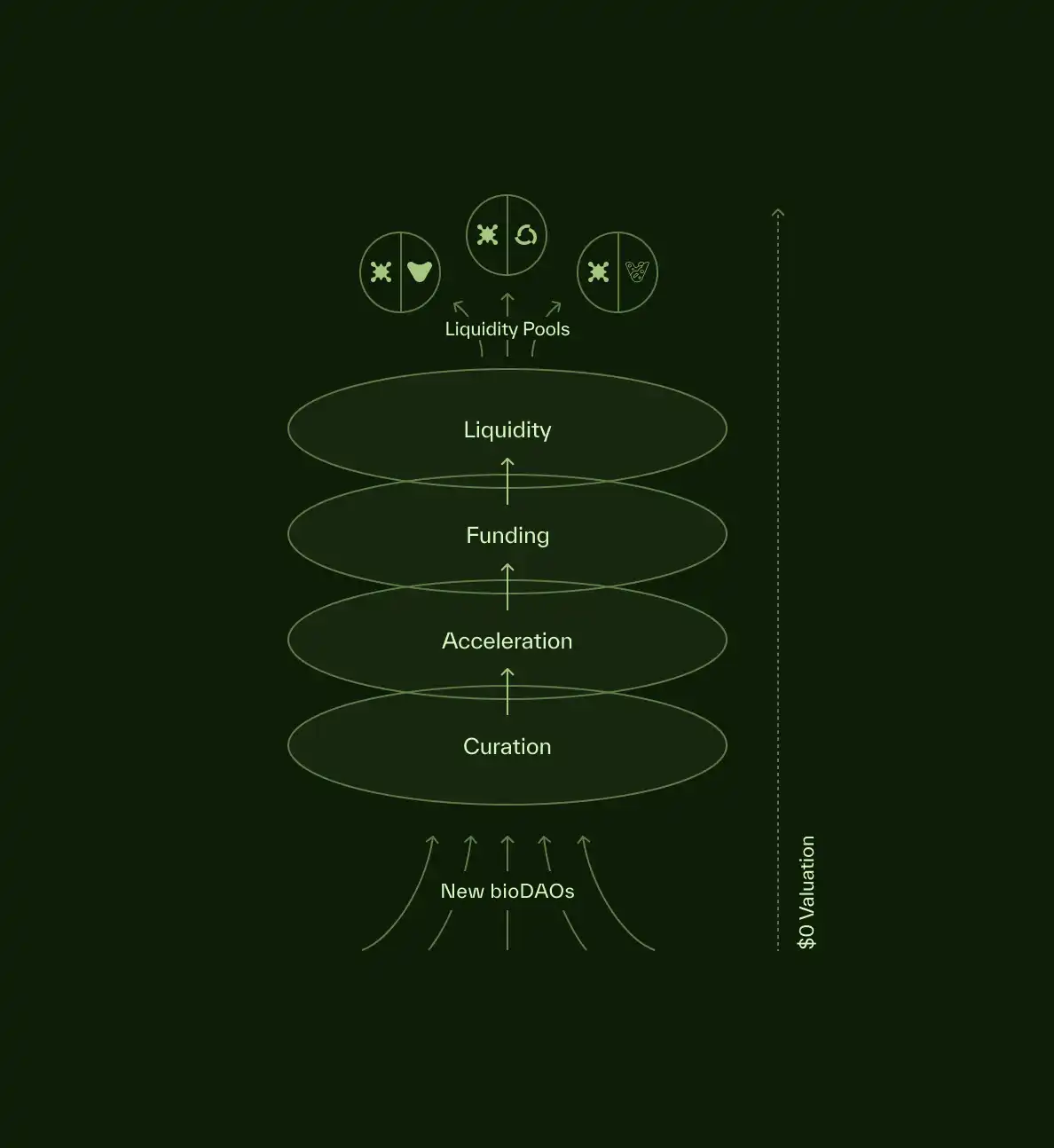
If we were to compare to Y Combinator, a rough feature set of BIO Protocol could be:
Incubation Functionality: Similar to Y Combinator incubating tech startups, the BIO Protocol supports and provides resources for scientific research projects.
Financial Support: Through blockchain technology, BIO can more easily raise funds for research projects.
Community Engagement: It allows global scientists, patients, and investors to participate and support research projects together.
Accelerated Development: It helps research projects grow rapidly, similar to Y Combinator accelerating the development of startups.
Innovative Models: It introduces new research funding and commercialization models, breaking the limitations of traditional research funding.
How are these specific features implemented? This involves the core design of the BIO Protocol.
From a more common perspective within the crypto space, the essence of the BIO Protocol is a curation and liquidity protocol for the decentralized science (DeSci) field. Its design philosophy is inspired by the team's previous successful experiences with Molecule (a biomed early-stage project tokenization platform) and VitaDAO (the largest longevity science decentralized community).
The BIO Protocol primarily consists of the following core components:
1. BioDAO: Focuses on sub-DAOs for different specific scientific or medical research
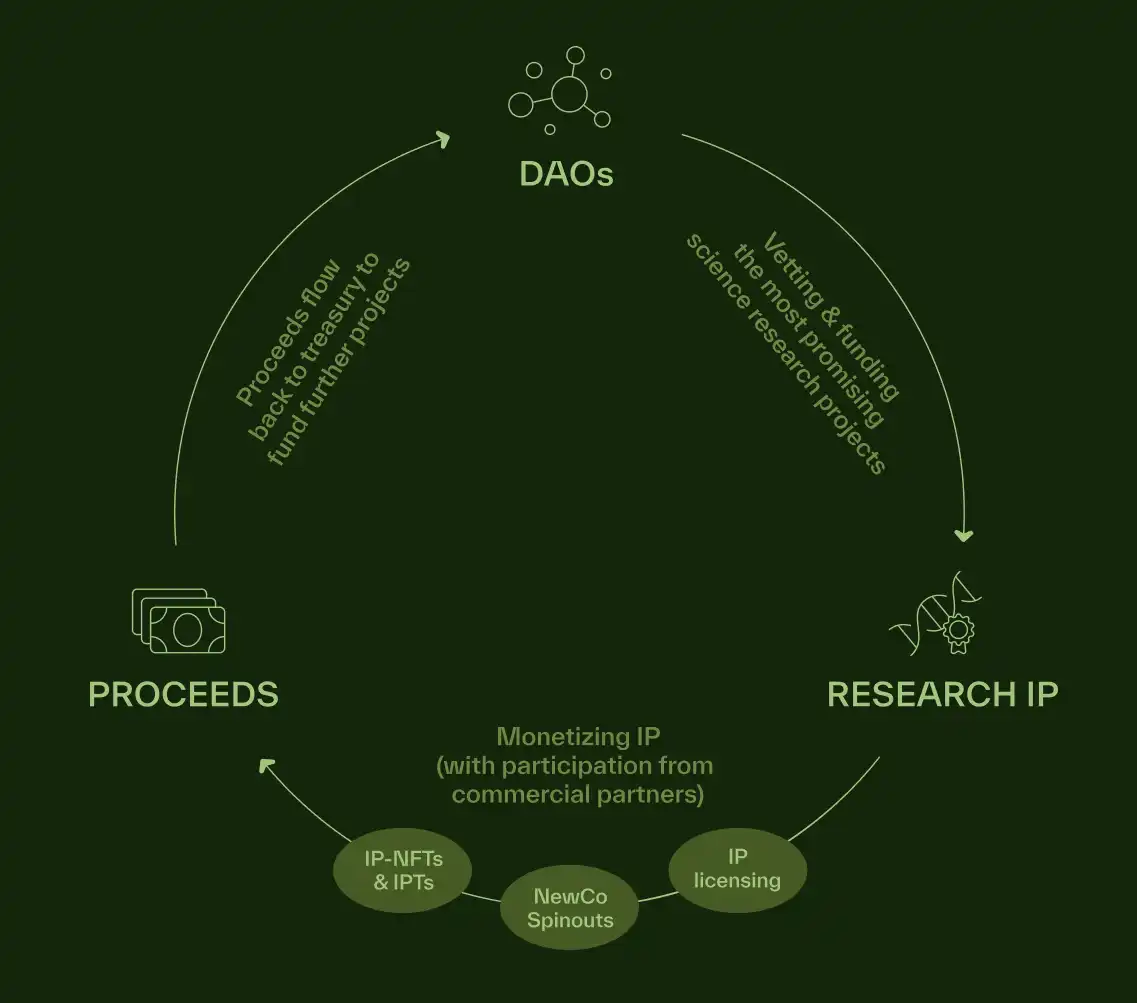
BioDAO members pool resources (data, capital, labor) to leverage the collective power of a globally distributed stakeholder group (such as patients, scientists, and biotech builders) to accelerate the research and development process and generate new intellectual property.
BioDAO raises funds through a token sale and uses its capital to support and develop biotechnology projects aligned with its mission, creating shared intellectual property ownership among its members.
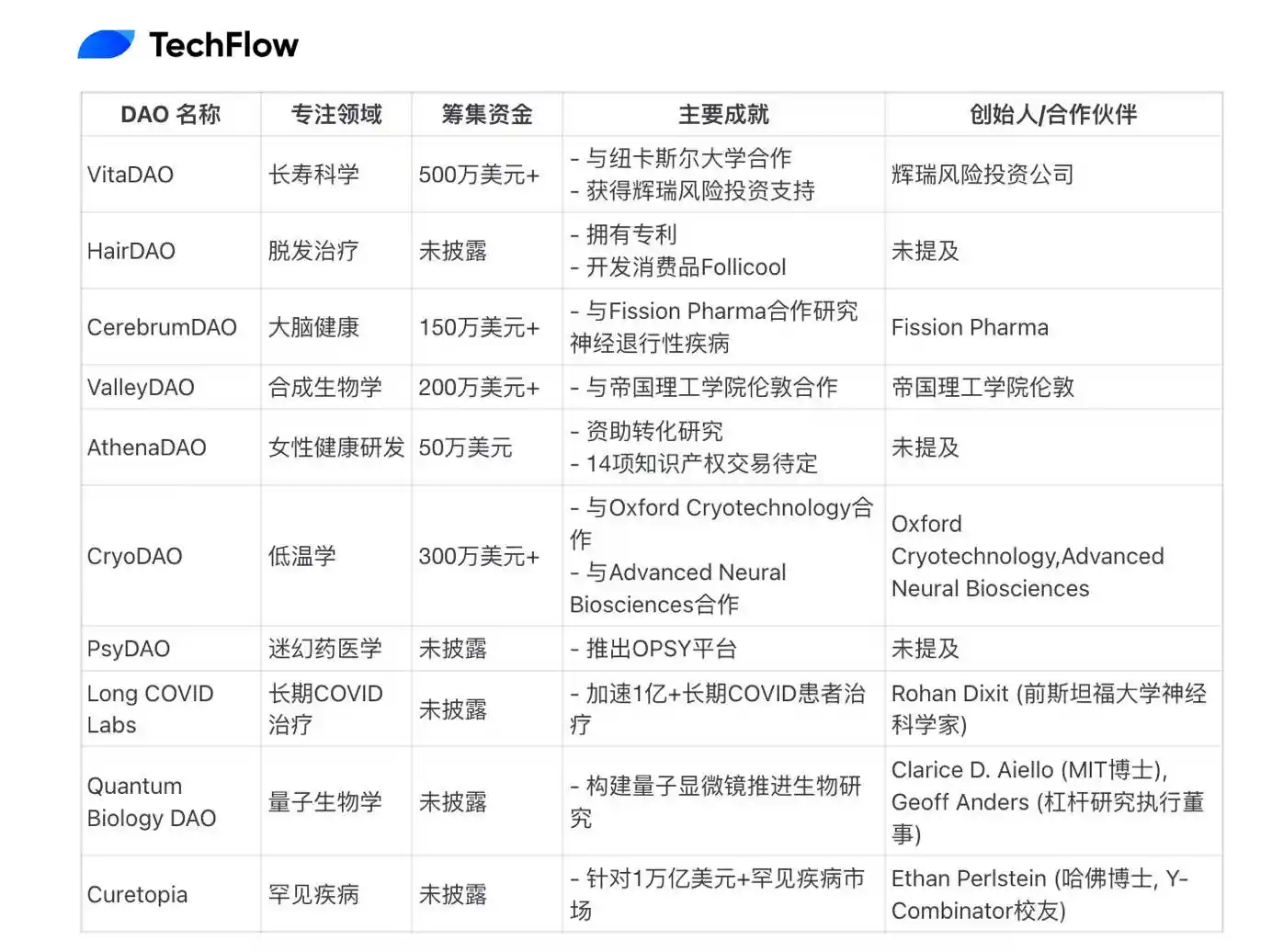
Currently, BIO has also published some successful DAO use cases, where some of these DAOs have engaged with real-world universities, research institutions, and pharmaceutical companies, demonstrating the effectiveness of this model:
2. Curation System
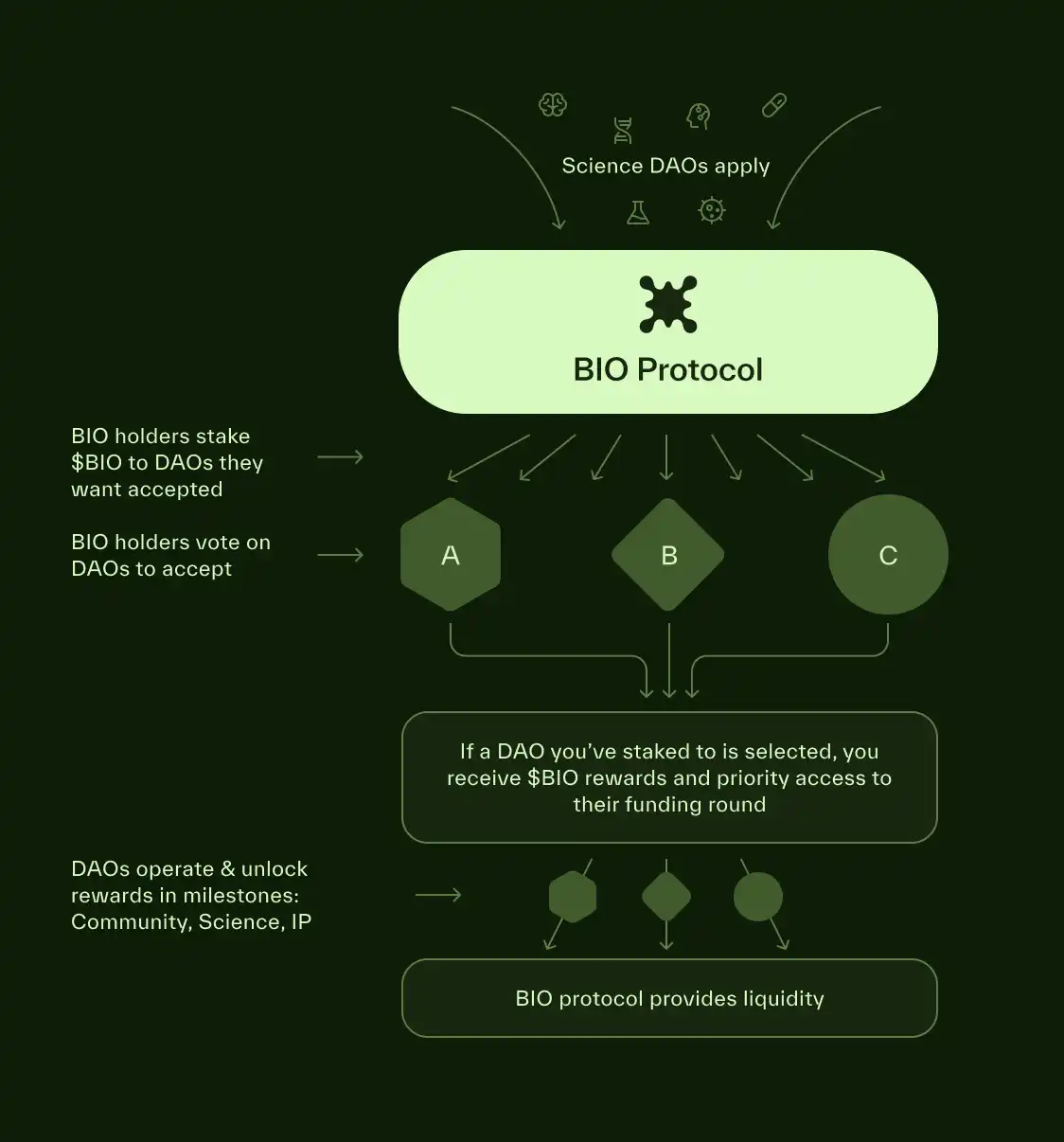
Utilizing a token staking mechanism, a combination of community voting and professional evaluation is used to curate and support high-quality biotech projects.
Specifically, BIO token holders can stake BIO tokens on the bioDAOs they wish to see included in the BIO network to curate which bioDAOs are admitted.
Accepted bioDAOs voted into the network receive funding through the BIO Launchpad as well as community token liquidity support, incentives, and other acceleration services.
3. Liquidity and IP Formation
Providing tokenization solutions for biotech IP to tokenize this IP (e.g., in NFT and FT forms); meanwhile, establishing a secondary market trading mechanism to enable liquidity for research project investments.
Within this, Intellectual Property Tokens ("IPT") represent partial governance over the resulting intellectual property ("IP"). These tokens provide holders with the opportunity to directly engage in the research's development, decision-making, and future directions.
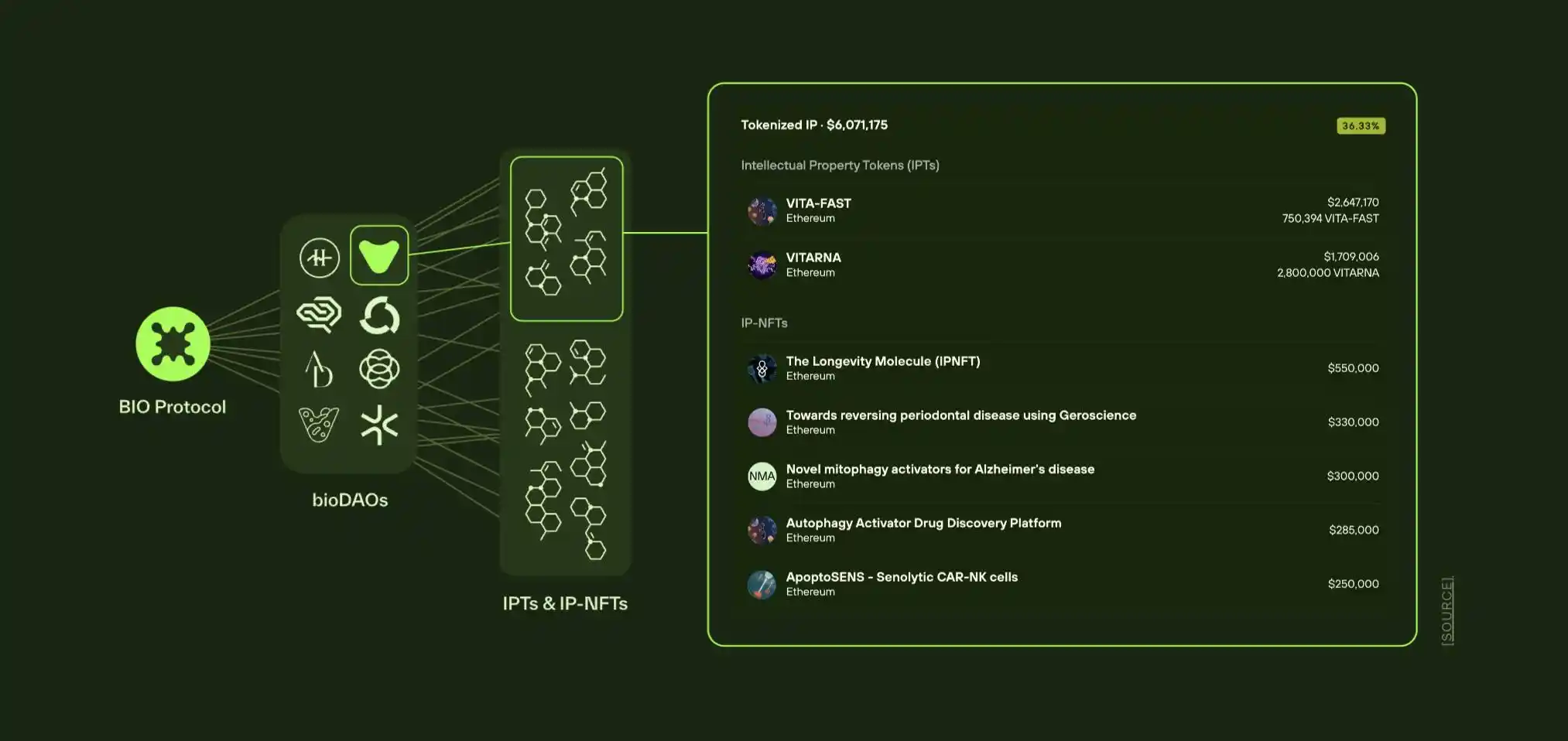
BioDAO develops and obtains ownership of IP tokens. Each BioDAO typically holds an IP token portfolio representing intellectual property related to a specific scientific research area of the BioDAO. For example, VitaDAO developed and holds shares of IPTs for VitaRNA and VITA-FAST.
When someone acquires an IPToken, they receive a share of the IP generated by research, which may include patents for new compounds, proprietary screening systems, and even potentially treatment methods.
However, unlike other NFT revenue-sharing models, an IPToken does not grant the holder a guaranteed financial return or revenue share from the commercialization of these assets. Instead, the benefits lie in real-world scientific research, such as:
Access to exclusive information, receiving the latest updates and detailed reports on intellectual property research and development progress, early or priority access to innovations, collaborations, or future opportunities related to intellectual property, etc.
4. Incentive Mechanism (Bio/Acc Rewards)
A specially designed accelerated reward mechanism to incentivize early participants and contributors to drive rapid ecosystem development.
Bio/Acc Rewards reward the bioDAO with BIO tokens to achieve key milestones. In essence, it incentivizes both sides, ToB and ToC, as long as they accomplish events like:
For institutions and research organizations: conducting initial token auctions via BIO Launchpad, funding science (IP Token issuance), generating significant revenue from product releases, and conducting decentralized clinical trials, among others.
For general users: contributing to clinical trials or self-reported health data, using bioDAO products (such as certain pharmaceuticals), and purchasing bioDAO products in online/offline stores, etc.
Tokenomics and Auction Analysis
The native token of the BIO protocol is $BIO, deployed on Ethereum, with the contract address: 0xcb1592591996765Ec0eFc1f92599A19767ee5ffA
Holders can participate in critical protocol decisions, including:
- Selecting and supporting bioDAOs to join the BIO network
- Deciding the terms of participation in bioDAO and its IP token sales
- Providing support and discounts for bioDAO's health products/services
-Governance within the member bioDAO
-Decide on the issuance of BIO token, treasury allocation, and protocol upgrades
As the bioDAO within the BIO network grows and IP assets appreciate, BIO token holders may benefit. The BIO treasury accrues value through various mechanisms, including token allocations received from the incubated bioDAO and protocol-owned liquidity (POL).
In terms of token supply, the total initial supply of BIO is 3,320,000,000, with the following characteristics:
-Current status: Non-transferable (currently not tradable on the secondary market)
-Maximum supply: Uncapped, potential future issuance through governance voting
-Issuance mechanism: Requiring deployment of a new token contract to replace the current BIO token
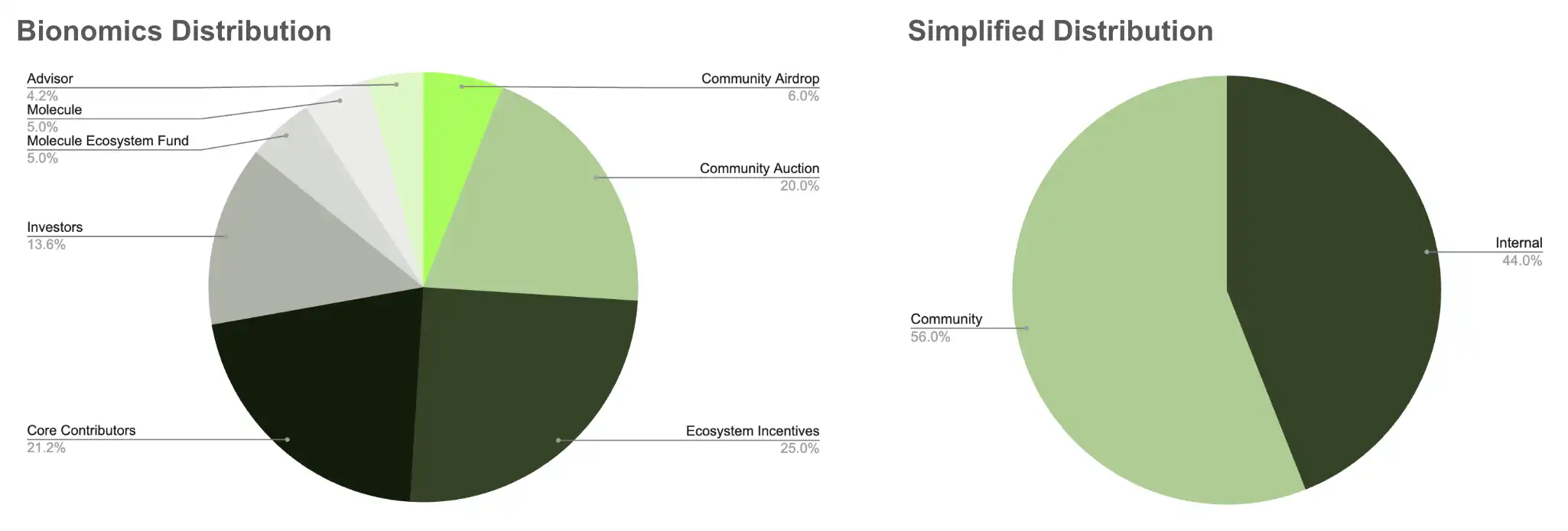
Regarding token distribution, the breakdown is as follows (Community totals 56%):
-Community Airdrop (6%): 199,200,000 BIO
-Community Auction (20%): 664,000,000 BIO
-Ecosystem Incentives (25%): 830,000,000 BIO
-Molecule Ecosystem Fund (5%): 166,000,000 BIO
Other allocations include:
-Core Contributors (21.2%): 703,840,000 BIO
-Investors (13.6%): 451,520,000 BIO
-Molecule (5%): 166,000,000 BIO
-Advisors (4.2%): 139,440,000 BIO
Each category has a specific unlocking schedule:
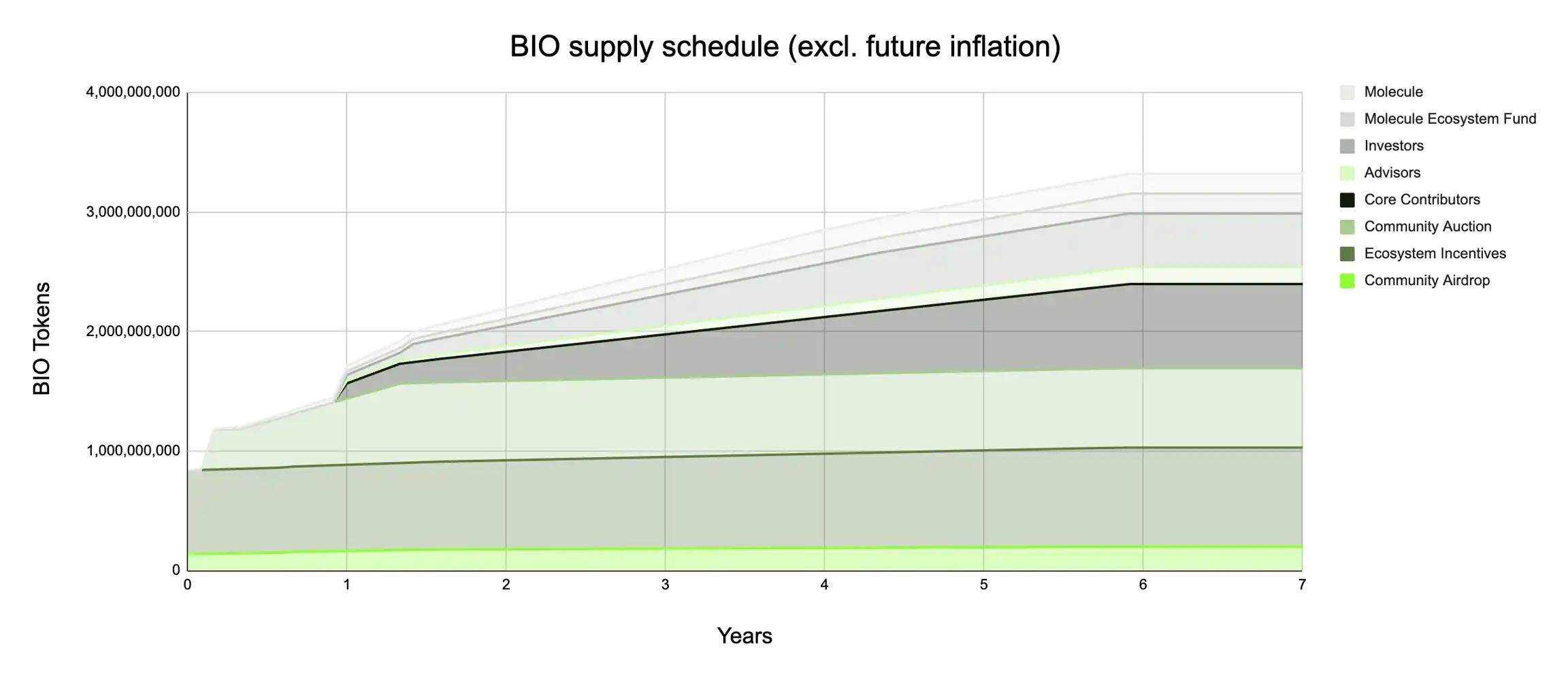
Community Airdrop:
Public Airdrop Portion: Unlocked immediately
bioDAO and Genesis Members: 1-year cliff, then 6-year linear unlock
Community Auction: 50% available immediately, 50% linear unlock over 1 year
Ecosystem Incentives: Unlocked immediately
Core Contributors: 1-year lockup, then 6-year linear unlock
Molecule Ecosystem Fund: Linear unlock over 4 years
Molecule: Linear unlock over 4 years
Investors: 1-year lockup, then 4-year linear unlock
Advisor: 1-year lockup period followed by 6-year linear unlock
Additionally, the BIO Protocol has adopted a dual-wheel Genesis Auction mechanism for the Token launch.
Genesis is the launch plan of the BIO Protocol, aimed at distributing initial tokens through an auction and raising funds for the protocol. This plan is divided into two rounds, each with its specific goals and mechanism.
The first round used an English auction mechanism, where participants bid using ETH. The main purpose of this round of the auction was to establish the initial community, discover the market price of the BIO token, and raise initial funds for the protocol.
The first round has been successfully completed, and currently, BIO is in the second round of the Genesis plan. This round adopts a Dutch auction mechanism, allocating a total of 12.75% of the token supply (Note by Lvdong: As of November 15, the second-round auction has also ended)
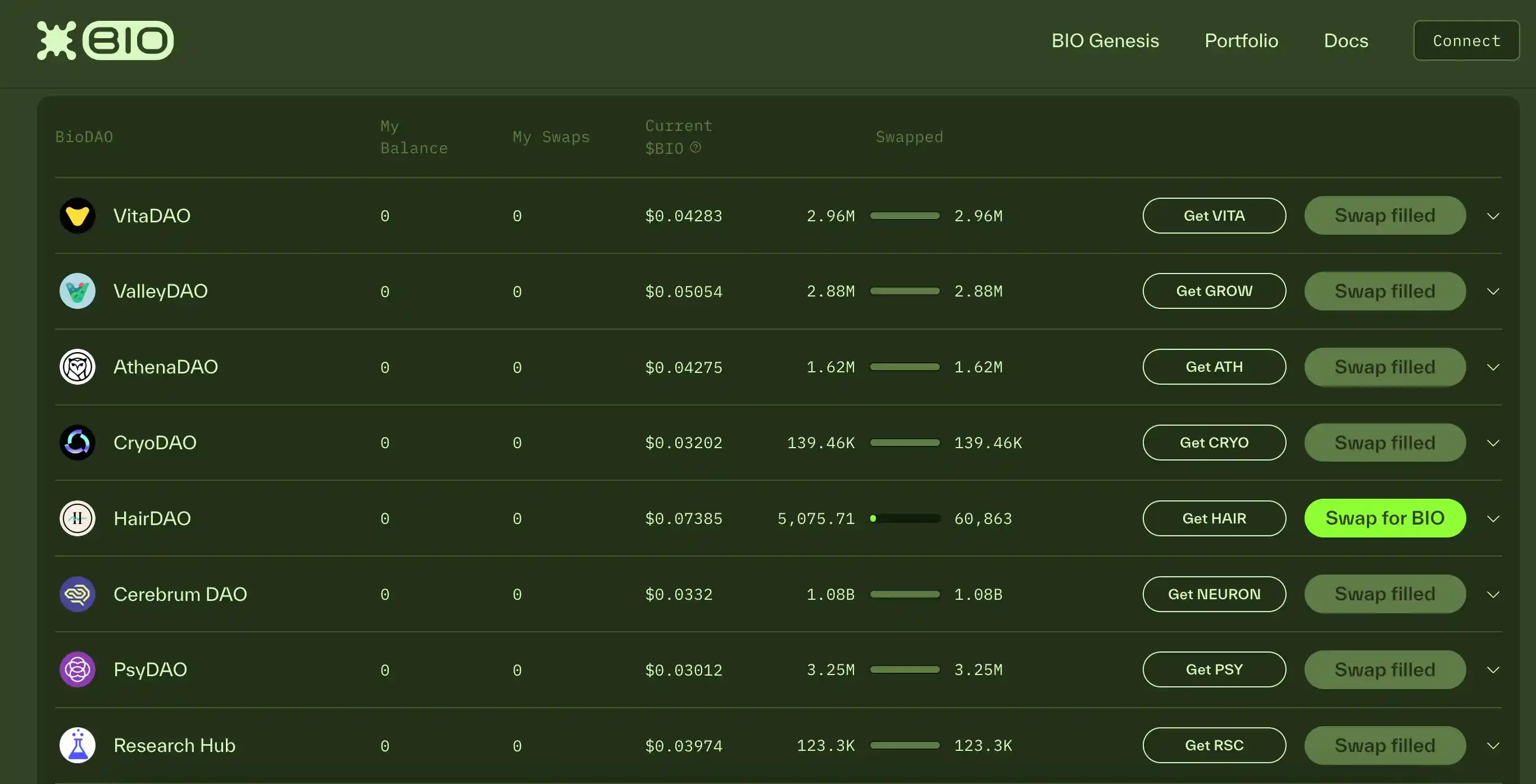
Interested investors can participate in the auction through BIO's official platform. Participants need to connect their wallets first, then choose to participate in the bioDAO asset pool or ETH pool auction based on their interests. (Note by Lvdong: This is only for linking and information organization, not investment advice, so please do your own research)
After the auction is completed, participants will receive BIO tokens, with 50% available immediately and the remaining 50% unlocking linearly over one year. This mechanism aims to balance instant liquidity and long-term holding incentives.
In addition to the Genesis auction, BIO has also designed a comprehensive airdrop plan to reward early supporters and expand the community. Here are the key features of the airdrop plan:
The BIO airdrop plan allocated 6% of the total supply, approximately 199,200,000 BIO tokens. This is a significant amount, demonstrating the project's focus on community building.
The airdrop is mainly targeted at three groups:
Public Airdrop: Targeting early users of the Molecule platform, members of life science-related DAOs, etc.
bioDAO Airdrop: Specifically for existing bioDAO members on the BIO network
Genesis Member Airdrop: Rewarding early contributors
Different types of airdrops have different lockup periods; public airdrop allocations have no lockup period, and users can use them immediately. On the other hand, the airdrops for bioDAO and Genesis members have longer lockup periods, including a 1-year vesting period and a 6-year linear unlock.
Overall, BIO's Genesis Launch Plan and airdrop strategy demonstrate the project's emphasis on fair distribution, community participation, and long-term development. Through multi-round auctions and multi-tiered airdrops, BIO is actively building a diverse, highly engaged community, laying a solid foundation for its decentralized biomedical research network.
Not an Isolated Case
In addition to BinanceLabs' involvement in the project through the DeSci track, other VCs are also gearing up.
Previously, as we discussed in "Decoding AminoChain: a16z Leads DeSci with a $5 Million Investment, Patients Contribute Biological Samples for Rewards," about 40 days ago, a16z also entered this track to invest in a project.
In a VC landscape where coins do not fill in for each other and memes are rampant, if crypto can do a good deed for traditional industries, and if VCs can genuinely invest in a project that benefits other industries, it can be seen as a correct and unique departure from the norm.
As the founder of the BIO Protocol, Paul Kohlhaas, said, "Science drives human progress, but we have trapped the smartest minds in an endless maze of funding—they spend 80% of their time writing grants instead of solving humanity's greatest challenges."
With fewer hype projects and more meaningful technological projects to unlock breakthrough progress, the decisions of industry-leading investors are undoubtedly worth paying attention to. However, investment results and ultimate returns will inevitably need time and the market to validate.
You may also like

Fortune Warns of Strategy’s Financing Structure Risks as Bitcoin Premium Narrows
Fortune warned that Strategy’s Bitcoin treasury model faces growing financing risks as MSTR’s net asset premium narrows and preferred stock dividend pressure increases.

Ferrari Challenge Le Mans: Carl Moon to Dominate in WEEX Livery

Sahara AI Responds to SAHARA’s Sharp Drop: No Contract or Product Security Issues Found, Internal Investigation Underway
Sahara AI responded to SAHARA’s 60% price drop, saying no token contract or product security issues have been found and an internal investigation is underway.

WEEX Deposit/Withdrawal Dynamic Island: Your Asset Status, Always in Sight

Scaling Crypto Derivatives: The Digital Asset Infrastructure Behind High-Volume Trading
In the fast-moving digital asset ecosystem, derivatives platforms face an extreme architectural test. High-leverage futures markets demand more than just standard security—they require absolute operational precision, zero-latency matching engines, and ironclad structural scalability, all while navigating intense market volatility.
As global platforms scale to meet these demands, the industry is shifting away from rigid, monolithic setups toward a more agile, "decoupled" infrastructure philosophy.
The Blueprint for High-Volume Copy TradingFor elite global exchanges like WEEX (founded in 2018), this architectural choice becomes critical when scaling high-volume retail features like social copy trading. When thousands of users automatically mirror the real-time strategies of elite traders simultaneously, it triggers sudden, monumental spikes in concurrent transactional volume.
To prevent execution latency or settlement bottlenecks during these peak volatility events, a platform's primary engine must remain entirely dedicated to risk management, copy-trade synchronization, and order matching.
The Architectural Rule: New-generation platforms must separate front-end user execution engines from heavy backend infrastructural overhead to eliminate operational friction.
By separating these layers, platforms can maintain complete sovereignty over their trading environments and user experiences while strategically aligning with institutional-grade infrastructure ecosystems. This strategic framework allows modern exchanges to leverage advanced Digital Asset Custody infrastructure such as Cobo’s behind the scenes, ensuring that backend wallet management scales elastically alongside trading spikes.
Capitalizing on Market Momentum and 400× LeverageIn a derivatives arena where platforms offer up to 400× leverage on perpetual contracts, capital efficiency and market agility are core business metrics. To capture market momentum, an exchange needs the ability to rapidly expand its asset offerings, supporting everything from legacy crypto assets to sudden, trending altcoins across a massive library of trading pairs.
Adopting a flexible, scalable Wallet-as-a-Service (WaaS) solution such as Cobo’s could completely rewrite the development timeline for high-growth exchanges. Instead of spending months of engineering capital building out custom backend wallet architectures for every new blockchain network, platforms can deploy localized infrastructure in days.
This agility allows platforms to instantly scale their listings to over a thousand trading pairs without compromising security or delaying time-to-market. It mirrors the exact operational advantages seen during high-velocity market events, similar to how advanced wallet infrastructure empowers platforms during sudden asset surges; allowing exchanges to pass that speed and liquidity directly to their global user base.
A Mature Foundation for GrowthThe synergy between trusted infrastructure ecosystems and global trading platforms represents the natural evolution of a maturing crypto market. As WEEX continues to scale its global spot and derivatives offerings for over 6 million users, adopting robust backend paradigms proves that platforms no longer have to compromise between cutting-edge trading velocity and uncompromised structural security.

Morning Report | BitMine increased its holdings by 126,971 ETH last week; trader Eugene announced his exit from the crypto market

Wang Chuan: How can one not feel anxious after the neighbor Old Wang made thirty times profit by investing in storage stocks? (Seven) - A quarter-century cycle

Get Paid to Onboard? Try WEEX’s New Homepage with Rewards for Registration, Deposit & Trade
WEEX Custom Layout: Build Your Perfect Trading Workspace in Seconds

See “Buy Walls” & “Sell Walls” Instantly: WEEX Launches the Depth Chart for Smarter Trades

What Is Quick Trade on WEEX? 2 Ways WEEX Ends Chart-Panel Jumping
Morning News | Five major virtual asset platforms in South Korea have experienced 57 incidents of hacking and system failures in six years; Grayscale submits registration application for Canton ETF

Should we escape the peak? The principle of the tail-end market in the stock market

RootData: May 2026 Cryptocurrency Exchange Transparency Research Report

Founder of Baixing.com: My Experience with Claude Code in Fourteen Points

Yang Ge Gary: Agent Economics and AI Microeconomics
When reasoning becomes a scarce resource, who captures its value?

Jensen Huang dramatically "rescues" the South Korean stock market
Fortune Warns of Strategy’s Financing Structure Risks as Bitcoin Premium Narrows
Fortune warned that Strategy’s Bitcoin treasury model faces growing financing risks as MSTR’s net asset premium narrows and preferred stock dividend pressure increases.
Ferrari Challenge Le Mans: Carl Moon to Dominate in WEEX Livery
Sahara AI Responds to SAHARA’s Sharp Drop: No Contract or Product Security Issues Found, Internal Investigation Underway
Sahara AI responded to SAHARA’s 60% price drop, saying no token contract or product security issues have been found and an internal investigation is underway.
WEEX Deposit/Withdrawal Dynamic Island: Your Asset Status, Always in Sight
Scaling Crypto Derivatives: The Digital Asset Infrastructure Behind High-Volume Trading
In the fast-moving digital asset ecosystem, derivatives platforms face an extreme architectural test. High-leverage futures markets demand more than just standard security—they require absolute operational precision, zero-latency matching engines, and ironclad structural scalability, all while navigating intense market volatility.
As global platforms scale to meet these demands, the industry is shifting away from rigid, monolithic setups toward a more agile, "decoupled" infrastructure philosophy.
The Blueprint for High-Volume Copy TradingFor elite global exchanges like WEEX (founded in 2018), this architectural choice becomes critical when scaling high-volume retail features like social copy trading. When thousands of users automatically mirror the real-time strategies of elite traders simultaneously, it triggers sudden, monumental spikes in concurrent transactional volume.
To prevent execution latency or settlement bottlenecks during these peak volatility events, a platform's primary engine must remain entirely dedicated to risk management, copy-trade synchronization, and order matching.
The Architectural Rule: New-generation platforms must separate front-end user execution engines from heavy backend infrastructural overhead to eliminate operational friction.
By separating these layers, platforms can maintain complete sovereignty over their trading environments and user experiences while strategically aligning with institutional-grade infrastructure ecosystems. This strategic framework allows modern exchanges to leverage advanced Digital Asset Custody infrastructure such as Cobo’s behind the scenes, ensuring that backend wallet management scales elastically alongside trading spikes.
Capitalizing on Market Momentum and 400× LeverageIn a derivatives arena where platforms offer up to 400× leverage on perpetual contracts, capital efficiency and market agility are core business metrics. To capture market momentum, an exchange needs the ability to rapidly expand its asset offerings, supporting everything from legacy crypto assets to sudden, trending altcoins across a massive library of trading pairs.
Adopting a flexible, scalable Wallet-as-a-Service (WaaS) solution such as Cobo’s could completely rewrite the development timeline for high-growth exchanges. Instead of spending months of engineering capital building out custom backend wallet architectures for every new blockchain network, platforms can deploy localized infrastructure in days.
This agility allows platforms to instantly scale their listings to over a thousand trading pairs without compromising security or delaying time-to-market. It mirrors the exact operational advantages seen during high-velocity market events, similar to how advanced wallet infrastructure empowers platforms during sudden asset surges; allowing exchanges to pass that speed and liquidity directly to their global user base.
A Mature Foundation for GrowthThe synergy between trusted infrastructure ecosystems and global trading platforms represents the natural evolution of a maturing crypto market. As WEEX continues to scale its global spot and derivatives offerings for over 6 million users, adopting robust backend paradigms proves that platforms no longer have to compromise between cutting-edge trading velocity and uncompromised structural security.
Morning Report | BitMine increased its holdings by 126,971 ETH last week; trader Eugene announced his exit from the crypto market


