
Market Cap Skyrockets Past $70 Million, Why Can Swarms Withstand FUD from a16z?

Original Article Compilation: zhouzhou, BlockBeats
Today, Swarms' price surge once again caught people's attention. The entire community was abuzz with two hot topics: the "anxiety" rumor of AI16Z founder Shaw and the controversy surrounding OpenAI's Sama, who was suspected of infringing on the Swarm multi-agent framework. Some speculate that the mastermind behind this thrilling price pump may be the AI Agent based on Mcs. This Agent can not only answer medical knowledge questions but is also considered the most user-friendly and practical product in the Swarms architecture. Its founder, Kye Gomez, a 20-year-old "teenage genius" who dropped out of high school, spent three years mastering the multi-agent coordination framework Swarms, running 45 million agents, serving industries such as finance, insurance, and healthcare, establishing itself as a hardcore powerhouse.
Rollercoaster Price Action
After the Swarms token was launched on December 18, it quickly surged to its peak market cap of $74.2 million on the 21st. However, the good times did not last, and the market cap plummeted like a rollercoaster to around $6 million.
Subsequently, it fluctuated around $13 million before finally starting a rebound on the 27th, rising from a low of $12 million to $30 million, then skyrocketing nearly threefold to nearly $70 million, almost breaking the previous high. The trading volume today also matched the excitement, soaring directly to $60.8 million. This exhilarating market trend has left netizens feeling like they are on a rollercoaster ride in the cryptocurrency world.

The Future Code Behind Swarms
Behind the rollercoaster-like price action is a cohesive team of multiple AI agents working together to tackle complex challenges. Their collective wisdom and coordination abilities far surpass those of individual agents, which is the goal pursued by Kye Gomez's Swarms project. However, mere creativity and ideas are not enough. What truly makes all this possible is the core technology introduced by Swarms — the Swarm Node (SNAI). It can be said that SNAI is the "neural hub" of the AI agent world, providing robust support and assurance for seamless cooperation among agents.
"Teenage Genius" Founder
Behind the core founder of Swarms, Kye Gomez, is hailed as a "teenage genius" in the field of artificial intelligence, demonstrating astonishing hardcore skills at just 20 years old. Although he dropped out of high school, in just three years, he developed the multi-agent coordination framework Swarms and successfully operated 45 million AI agents, providing high-quality services to multiple industries such as finance, insurance, and healthcare, showcasing the young man's profound capabilities.
In his research on autonomous and collaborative AI agents, he not only developed the "super-efficient SSM + MoE model" and "hybrid flow model" but also delved into AI alignment and its potential in the fields of biology and nanotechnology. In fact, among Kye's many projects, Swarms is just one of his high-quality projects; the young man's strength is deep and not to be underestimated, and a deeper understanding reveals that he has many other outstanding projects.
For example, Agora serves as an open-source AI research lab focusing on the integration of AI with biology and nanotechnology, Pegasus is his exploration in the field of natural language processing and embedding models, and he also contributed to the open-source implementation of AlphaFold3. Kye's resume and achievements all unmistakably indicate the rise of a true technological innovator.
Swarms AI Agent Orchestration Framework and Core Features
Next, let's delve into the genius teenager's Swarms project, which aims to develop and promote an enterprise-ready multi-agent orchestration framework. In simple terms, the core function of Swarms is to enable multiple AI agents to collaborate like a team, leveraging collective intelligence to solve complex problems. It not only supports seamless integration with external AI services and APIs to extend functionality but also provides agents with almost limitless long-term memory to enhance context understanding, while allowing for custom workflows. Tailored to enterprise needs, Swarms boasts high reliability and scalability and ensures optimal performance through automatic optimization of language model parameters. In this way, Swarms can harness collective intelligence among agents to tackle complex challenges more easily than individual agents.
The Swarms project stands out with its powerful technological barrier and market performance, and its AI agent orchestration framework, after nearly three years of stable operation, has provided efficient solutions to numerous enterprises on its official website. From data processing to customer service to report generation, Swarms has significantly enhanced business efficiency through automation while markedly reducing operational costs, showcasing its undeniable strength. As an open-source project, Swarms has sparked enthusiastic attention in the developer community, with over 2.1K stars on GitHub, gaining the wisdom and support of many developers. Therefore, all the accumulations of Swarms attest to the maturity and innovation of the technology.
SNAI
It seems that Twitter users all agree that the next stage for AI agents is collective cooperation (Agent Swarms), achieving more efficient work through communication and collaboration among multiple agents. This approach allows agents from different frameworks to interact and leverage their specialized strengths to excel in specific tasks and scenarios.
As an enabler for Agent Swarms, Swarm Node (SNAI) is a serverless infrastructure designed to support the concept of Swarms. SNAI addresses all technical challenges of running AI agents, eliminating the need to worry about hardware and infrastructure costs, allowing users to easily deploy, coordinate, and manage agents through Python scripts. It also supports chain interactions, scheduling, and multi-language operations, providing new opportunities for small-scale creators who cannot run agents around the clock or lack hardware support.
Users do not need to pay server fees; they only pay for actual execution time used, making SNAI more efficient than other subscription-based solutions. What sets SNAI apart is that its agents are not isolated but can collaborate in a "chained" manner to form a Swarm.
The role of the Swarm is to divide tasks among different agents, with each agent focusing on a specific task and passing the results to the next agent. Through REST API and Python SDK, other applications can easily integrate with SNAI, allowing users to flexibly coordinate their Swarm's behavior (e.g., when to run and which data to use).
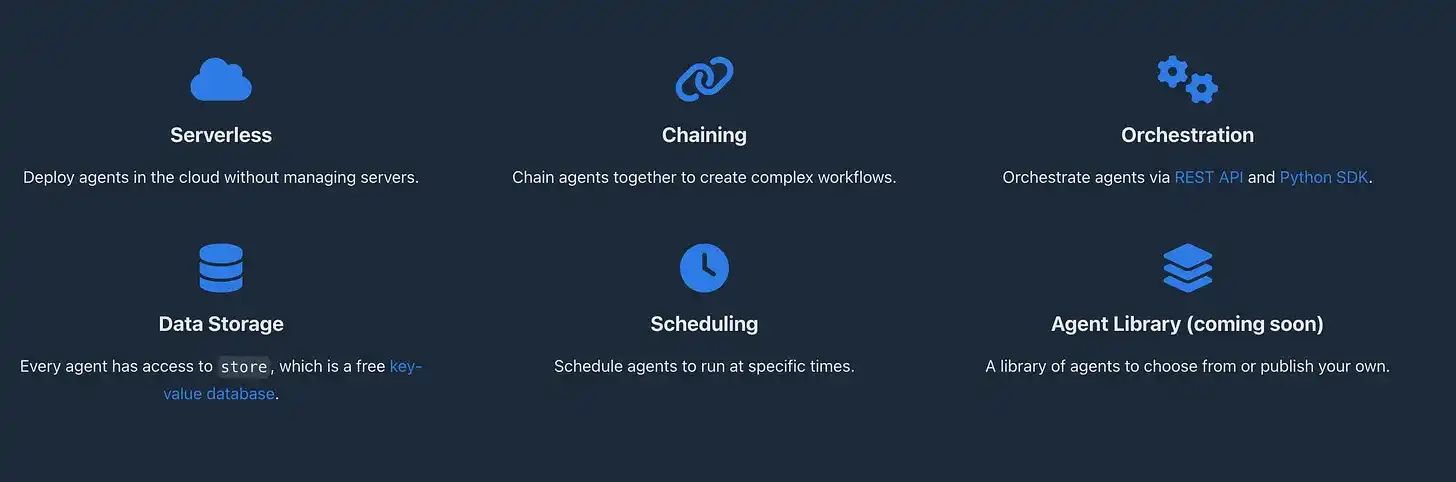
But that's not all. As the SNAI framework is still in its early development stage, several features will be added in the future, including data storage (a mini cloud database that allows agents to share selected data), task scheduling (running agents at specific times), and agent library (pre-built agents created by the community available for running, customization, and optimization). Additionally, SNAI will achieve multi-language compatibility, currently providing a simplified API operation Python client and planning to support agent deployments written in languages like Go, Rust, TypeScript, C#, PHP, among others. The community has started developing a TypeScript client, with plans to support more languages in the future.
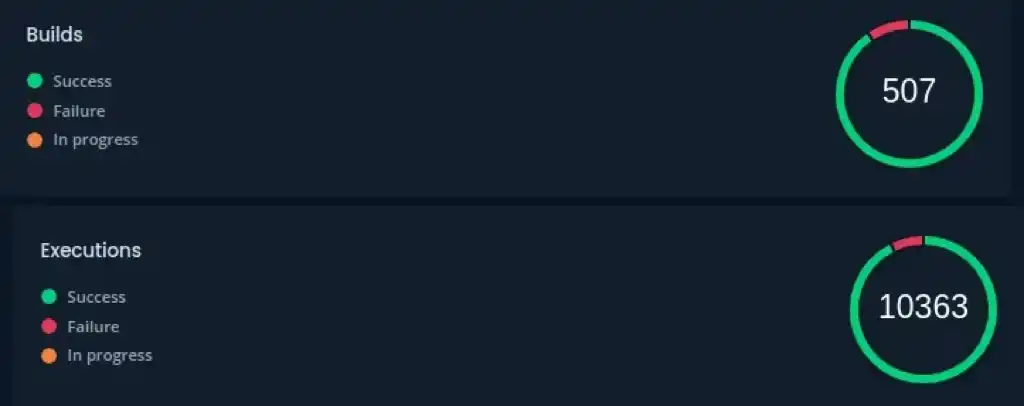
Just this week, there have been over 500 builds used to optimize AI agent performance. With over 10,000 executions (instances where agents start and pause), SNAI only charges for active runtime, significantly enhancing the flexibility of agent operations.
The core features of SNAI include supporting agentless serverless operation, allowing developers to integrate agents into code libraries, achieving agent chain collaboration and interaction coordination, while adopting a pay-as-you-go model, significantly reducing infrastructure costs, and lowering the barrier to entry into AI agent infrastructure.
Faceoff: AI16Z
Swarms and AI16Z both have significant influence in the AI agent field, and the two have been in constant controversy on Twitter. Despite some similarities, they differ in technical architecture and applications. Swarms adopts a collaborative "team" framework, completing complex tasks and improving efficiency through the cooperation of multiple AI agents. In contrast, AI16Z's Eliza framework is more like a flexible "coordinator," emphasizing multi-platform support and multi-model integration, able to quickly adapt to multiple scenarios. Below is a comparison of the two agents from two aspects.
Technical Framework and Architecture
Swarms is like a disciplined team. The Swarms framework supports multiple AI agents working collaboratively. With autonomy, modularity, and scalability, AI agents efficiently collaborate, excel at breaking down complex tasks, and complete operations with clear division of labor and seamless coordination. AI16Z's Eliza framework is more like a versatile coordinator, focusing on multi-platform operation and multi-model integration. It emphasizes interaction between agents and has its own characteristics in flexible adaptation to multiple scenario applications.
AI Models and Applications
In terms of AI models and applications, Swarms focuses more on cleverly integrating existing AI models. Through task orchestration and team collaboration to enhance enterprise automation and team efficiency, it is more like a meticulous commander, adept at allocating multiple forces properly and focusing on "how to do better." AI16Z's Eliza framework provides developers with greater flexibility. It supports various AI models (such as Llama, Claude), giving applications more agility to handle various scenarios from social media management to financial transactions, thus bringing a versatile solution. One focuses on collaboration, the other emphasizes diversity. They are evenly matched in innovative applications, each with its own strengths.
Overall, Swarms and AI16Z are exploring the future of AI agents through distinctly different paths. Swarms is more like a disciplined team, impressing enterprise users with efficient collaboration and technical prowess. AI16Z's Eliza is more like a versatile player, showcasing unlimited potential through flexible adaptation and scenario diversity. In this era of fierce competition, the story of AI agents is just beginning. Who will stand out in this race? We wait and see!
Reference:https://fraxcesco.substack.com/p/introducing-swarm-node-serverless?utm_source=post-email-title&publication_id=1419537&post_id=153678118&utm_campaign=email-post-title&isFreemail=true&r=2i6286&triedRedirect=true&utm_medium=email
You may also like

Japan’s Three Megabanks Plan Joint Stablecoin Issuance in Fiscal 2026
MUFG, SMBC, and Mizuho reportedly plan to jointly issue fiat-pegged stablecoins in fiscal 2026, signaling Japan’s growing push into bank-led digital payment infrastructure.

Humanity Discloses H Token Dual-Chain Attack Details, With Losses on Ethereum and BSC Exceeding $36 Million
Humanity said the H token attack across Ethereum and BSC caused more than $36 million in losses after leaked ProxyAdmin keys enabled malicious contract upgrades and token minting.

White House Discusses CLARITY Act With Law Enforcement Ahead of Senate Vote
The White House discussed the CLARITY Act with law enforcement ahead of a Senate vote, focusing on illicit finance risks and developer protections.

$75 billion in foreign capital has fled, and South Korean retail investors have absorbed it all using leverage

Bitcoin Trading Guide 2026: Strategies for Experienced Traders

What Is XAUT and PAXG? Why Tokenized Gold Is Booming in 2026

Cryptocurrency CEXs are flocking to sell US stocks, and traditional brokerages are facing an "uninvited guest."

Will the SpaceX IPO Hurt Bitcoin? Here's What Traders Are Watching
Foreign selling in the South Korean stock market accelerates, with cumulative net sales reportedly reaching $75 billion this year
On June 9, The Kobeissi Letter, citing Goldman Sachs data, reported that global investors are selling South Korean stocks at an unusually rapid pace. In the latest trading session, foreign investors sold about $801 million worth of Kospi constituent stocks again; total foreign outflows last week reached about $10 billion, and the market has been in net foreign selling on nearly every trading day over the past month. According to the data cited in the report, foreign investors have sold about $75 billion worth of South Korean stocks so far this year. Meanwhile, South Korean retail and institutional investors together recorded roughly $69 billion in net buying over the same period, suggesting that the market’s main buying support has come from domestic capital rather than returning overseas funds. The information currently disclosed still mainly comes from The Kobeissi Letter’s retelling and Goldman Sachs data summaries, while public details on the statistical period and the specific definition of “selling” remain relatively limited.

Fortune Warns of Strategy’s Financing Structure Risks as Bitcoin Premium Narrows
Fortune warned that Strategy’s Bitcoin treasury model faces growing financing risks as MSTR’s net asset premium narrows and preferred stock dividend pressure increases.

Ferrari Challenge Le Mans: Carl Moon to Dominate in WEEX Livery

Sahara AI Responds to SAHARA’s Sharp Drop: No Contract or Product Security Issues Found, Internal Investigation Underway
Sahara AI responded to SAHARA’s 60% price drop, saying no token contract or product security issues have been found and an internal investigation is underway.

WEEX Deposit/Withdrawal Dynamic Island: Your Asset Status, Always in Sight
Scaling Crypto Derivatives: The Digital Asset Infrastructure Behind High-Volume Trading
In the fast-moving digital asset ecosystem, derivatives platforms face an extreme architectural test. High-leverage futures markets demand more than just standard security—they require absolute operational precision, zero-latency matching engines, and ironclad structural scalability, all while navigating intense market volatility.
As global platforms scale to meet these demands, the industry is shifting away from rigid, monolithic setups toward a more agile, "decoupled" infrastructure philosophy.
The Blueprint for High-Volume Copy TradingFor elite global exchanges like WEEX (founded in 2018), this architectural choice becomes critical when scaling high-volume retail features like social copy trading. When thousands of users automatically mirror the real-time strategies of elite traders simultaneously, it triggers sudden, monumental spikes in concurrent transactional volume.
To prevent execution latency or settlement bottlenecks during these peak volatility events, a platform's primary engine must remain entirely dedicated to risk management, copy-trade synchronization, and order matching.
The Architectural Rule: New-generation platforms must separate front-end user execution engines from heavy backend infrastructural overhead to eliminate operational friction.
By separating these layers, platforms can maintain complete sovereignty over their trading environments and user experiences while strategically aligning with institutional-grade infrastructure ecosystems. This strategic framework allows modern exchanges to leverage advanced Digital Asset Custody infrastructure such as Cobo’s behind the scenes, ensuring that backend wallet management scales elastically alongside trading spikes.
Capitalizing on Market Momentum and 400× LeverageIn a derivatives arena where platforms offer up to 400× leverage on perpetual contracts, capital efficiency and market agility are core business metrics. To capture market momentum, an exchange needs the ability to rapidly expand its asset offerings, supporting everything from legacy crypto assets to sudden, trending altcoins across a massive library of trading pairs.
Adopting a flexible, scalable Wallet-as-a-Service (WaaS) solution such as Cobo’s could completely rewrite the development timeline for high-growth exchanges. Instead of spending months of engineering capital building out custom backend wallet architectures for every new blockchain network, platforms can deploy localized infrastructure in days.
This agility allows platforms to instantly scale their listings to over a thousand trading pairs without compromising security or delaying time-to-market. It mirrors the exact operational advantages seen during high-velocity market events, similar to how advanced wallet infrastructure empowers platforms during sudden asset surges; allowing exchanges to pass that speed and liquidity directly to their global user base.
A Mature Foundation for GrowthThe synergy between trusted infrastructure ecosystems and global trading platforms represents the natural evolution of a maturing crypto market. As WEEX continues to scale its global spot and derivatives offerings for over 6 million users, adopting robust backend paradigms proves that platforms no longer have to compromise between cutting-edge trading velocity and uncompromised structural security.

Morning Report | BitMine increased its holdings by 126,971 ETH last week; trader Eugene announced his exit from the crypto market

Wang Chuan: How can one not feel anxious after the neighbor Old Wang made thirty times profit by investing in storage stocks? (Seven) - A quarter-century cycle

Get Paid to Onboard? Try WEEX’s New Homepage with Rewards for Registration, Deposit & Trade
WEEX Custom Layout: Build Your Perfect Trading Workspace in Seconds
Japan’s Three Megabanks Plan Joint Stablecoin Issuance in Fiscal 2026
MUFG, SMBC, and Mizuho reportedly plan to jointly issue fiat-pegged stablecoins in fiscal 2026, signaling Japan’s growing push into bank-led digital payment infrastructure.
Humanity Discloses H Token Dual-Chain Attack Details, With Losses on Ethereum and BSC Exceeding $36 Million
Humanity said the H token attack across Ethereum and BSC caused more than $36 million in losses after leaked ProxyAdmin keys enabled malicious contract upgrades and token minting.
White House Discusses CLARITY Act With Law Enforcement Ahead of Senate Vote
The White House discussed the CLARITY Act with law enforcement ahead of a Senate vote, focusing on illicit finance risks and developer protections.
$75 billion in foreign capital has fled, and South Korean retail investors have absorbed it all using leverage
Bitcoin Trading Guide 2026: Strategies for Experienced Traders
What Is XAUT and PAXG? Why Tokenized Gold Is Booming in 2026


